 7 months ago
Introduction
In a landmark decision announced in March 2026, the Pentagon revealed plans to integrate Palantir's artificial intelligence (AI) platform as a core component of the United States military's operational infrastructure. This move marks a significant evolution in defense technology, reflecting the growing importance of AI in modern warfare and national security. The integration of Palantir AI is expected to enhance data analysis, decision-making, and operational efficiency across various branches of the military, fundamentally transforming how the U.S. armed forces conduct intelligence, surveillance, reconnaissance, and command and control operations.
This strategic adoption underscores the Pentagon's commitment to maintaining technological superiority in an era where information dominance is increasingly critical. By embedding Palantir's AI capabilities into its core systems, the military aims to streamline complex data processing, improve situational awareness, and accelerate response times in dynamic combat environments.
Context: The Rise of AI in Military Applications
Artificial intelligence has steadily become a critical asset in military strategy worldwide. Over the past decade, defense agencies have invested heavily in AI to improve intelligence gathering, threat detection, autonomous systems, and cyber defense. The increasing complexity of global conflicts and the volume of data generated by modern sensors and communication networks have made AI indispensable for timely and accurate decision-making.
Palantir Technologies, known for its advanced data integration and analytics platforms, has been a key player in providing AI-driven solutions to government agencies. Its software enables the synthesis of vast and disparate data sources into actionable intelligence, which is crucial for military operations that require rapid situational awareness and strategic planning. Palantir's platforms have been utilized in various defense and intelligence contexts, demonstrating their ability to handle large-scale data fusion and provide predictive insights that can shape operational outcomes.
The evolution of AI in military contexts has also been driven by the need to manage the sheer volume and velocity of data generated by modern warfare technologies, including satellite imagery, drone feeds, signals intelligence, and cyber threat indicators. AI systems like Palantir's help filter, analyze, and prioritize this information, enabling commanders to make informed decisions faster than ever before.
Core Aspects of the Pentagon’s Integration Plan
The Pentagon’s decision to adopt Palantir AI as a core military system involves several key components designed to enhance operational capabilities across multiple domains:
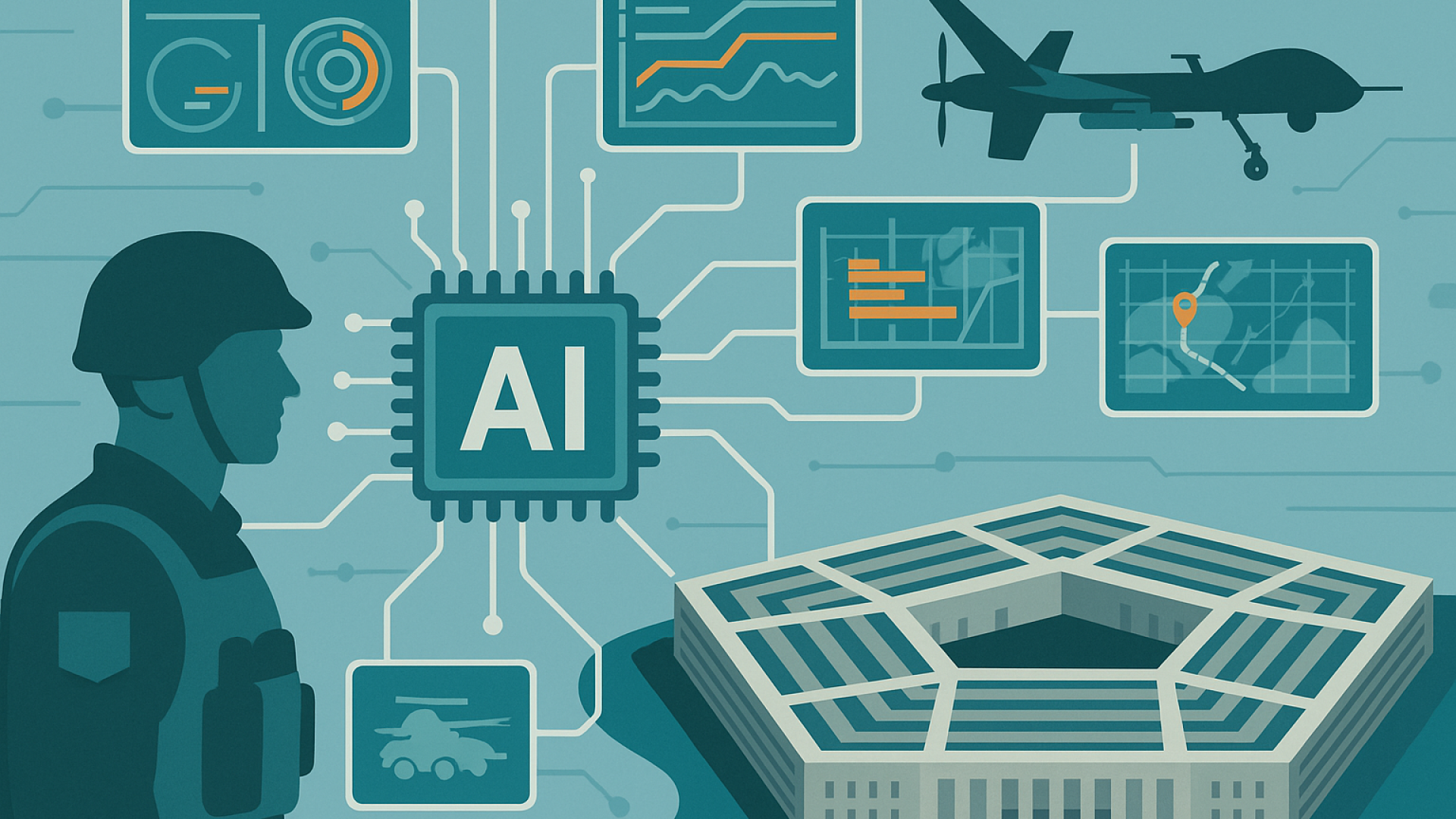
- Data Fusion and Analytics: Palantir AI will serve as a central hub for integrating data from satellites, drones, ground sensors, and human intelligence, providing commanders with a unified operational picture. This comprehensive data fusion allows for real-time situational awareness and the ability to detect emerging threats or opportunities on the battlefield.
- Enhanced Decision Support: The AI system will assist military leaders by offering predictive analytics, risk assessments, and scenario simulations to inform tactical and strategic choices. By modeling potential outcomes and identifying optimal courses of action, Palantir AI aims to reduce uncertainty and improve the quality of military decisions.
- Cybersecurity and Threat Detection: Palantir’s AI capabilities will bolster defenses against cyberattacks by identifying anomalies and potential breaches in real time. This proactive approach to cybersecurity is vital in protecting critical military infrastructure and maintaining operational integrity in contested environments.
- Interoperability: The platform is designed to work seamlessly across different branches of the military and with allied forces, facilitating coordinated operations. This interoperability ensures that data and intelligence can be shared securely and efficiently among diverse units and coalition partners, enhancing joint mission effectiveness.
Additionally, the integration plan includes provisions for continuous updates and adaptability, allowing the AI system to evolve alongside emerging threats and technological advancements. This flexibility is crucial for maintaining relevance in a rapidly changing security landscape.
Strategic Implications
The integration of Palantir AI into the U.S. military infrastructure carries significant strategic implications both domestically and internationally, influencing military doctrine, geopolitical dynamics, and defense industry trends.
Modernizing U.S. Military Capabilities
This initiative represents a major step in modernizing the U.S. military’s technological edge. By leveraging AI, the Pentagon aims to maintain superiority in intelligence processing and battlefield management, which are critical in an era where information dominance can determine the outcome of conflicts. Enhanced AI-driven analytics enable faster threat identification, improved resource allocation, and more precise targeting, thereby increasing operational effectiveness while potentially reducing collateral damage.
Moreover, the integration supports the military’s broader modernization efforts, including the development of autonomous systems, network-centric warfare, and multi-domain operations. Palantir AI’s ability to synthesize complex data streams aligns with these goals by providing a cohesive framework for command and control across air, land, sea, space, and cyber domains.
Shaping Global Military AI Trends
The U.S. adoption of Palantir AI is likely to influence other nations’ defense strategies. Countries such as China, Russia, and members of NATO are also investing heavily in military AI, and the Pentagon’s move may accelerate global competition in this domain. This development could prompt adversaries to enhance their own AI capabilities, potentially leading to an arms race in artificial intelligence technologies.
Furthermore, the integration sets a precedent for how AI can be embedded into military command structures, potentially shaping international norms and standards for AI use in defense. Allies may seek to adopt similar systems to maintain interoperability with U.S. forces, while adversaries might pursue countermeasures to mitigate the advantages conferred by AI-enhanced operations.
Ethical and Operational Challenges
While AI offers numerous advantages, it also raises ethical questions about autonomous decision-making in warfare, accountability, and the potential for unintended consequences. The Pentagon has emphasized that human oversight will remain central to AI-assisted operations to mitigate these risks. Ensuring that AI systems support rather than replace human judgment is critical to maintaining ethical standards and compliance with international law.
Operational challenges include the risk of overreliance on AI, vulnerabilities to adversarial attacks on AI systems, and the complexities of integrating AI into existing military workflows. Addressing these issues requires robust training programs, rigorous testing, and the development of fail-safe mechanisms to prevent malfunctions or misuse.
Global Context in March 2026
The announcement comes amid a complex geopolitical landscape marked by ongoing conflicts, technological rivalries, and shifting alliances. Key contextual factors include:
- Heightened Tensions in Strategic Regions: Conflicts in areas such as the Middle East and Eastern Europe continue to demand advanced intelligence capabilities. The dynamic and often unpredictable nature of these conflicts necessitates rapid data processing and adaptive decision-making, roles well-suited to AI-enhanced systems.
- Technological Rivalry: The U.S. faces competition from China and Russia in developing next-generation military technologies, including AI and quantum computing. This rivalry extends beyond hardware to include software, algorithms, and data infrastructure, making AI integration a critical component of maintaining strategic advantage.
- Allied Cooperation: The integration plan includes provisions for interoperability with allied forces, reflecting the importance of coalition operations in contemporary security challenges. Enhanced data sharing and joint AI capabilities can improve coordination and effectiveness in multinational missions, from peacekeeping to high-intensity conflict.
These factors underscore the urgency and strategic necessity of adopting advanced AI systems like Palantir’s to maintain operational readiness and technological leadership in a rapidly evolving global security environment.
Potential Solutions and Future Directions
To maximize the benefits and address challenges associated with Palantir AI integration, several approaches are being considered:
- Robust Training and Human-AI Collaboration: Ensuring military personnel are trained to effectively collaborate with AI systems to enhance decision-making without overreliance. This includes developing curricula that emphasize critical thinking, AI literacy, and scenario-based exercises that simulate AI-human interaction in operational contexts.
- Ethical Frameworks and Oversight: Developing clear policies and oversight mechanisms to govern AI use in military contexts, emphasizing transparency and accountability. Establishing ethical guidelines aligned with international humanitarian law and human rights principles will be essential to maintain legitimacy and public trust.
- Continuous Technological Innovation: Investing in research and development to improve AI capabilities, cybersecurity, and system resilience against adversarial attacks. This includes advancing explainable AI, robust encryption, and adaptive algorithms that can respond to evolving threats and operational demands.
- International Dialogue: Engaging with global partners to establish norms and agreements on the use of AI in warfare to prevent escalation and misuse. Multilateral forums and confidence-building measures can help mitigate risks associated with AI proliferation and foster responsible innovation.
Looking ahead, the Pentagon’s integration of Palantir AI may serve as a catalyst for broader transformation in military doctrine, procurement, and alliance structures. Embracing AI as a foundational technology will likely drive new concepts of operations, enhance joint and coalition warfare capabilities, and shape the future battlefield landscape.
Conclusion
The Pentagon’s integration of Palantir AI as a core military system represents a transformative development in defense technology. It underscores the critical role of artificial intelligence in shaping the future of warfare and national security. While offering substantial advantages in data analysis, decision support, and operational efficiency, this initiative also brings ethical and strategic challenges that require careful management. As the global landscape evolves, the U.S. military’s embrace of AI will likely influence international defense policies and the broader trajectory of technological competition.
Ultimately, the success of this integration will depend on balancing technological innovation with responsible governance, ensuring that AI serves as a force multiplier that enhances security while upholding ethical standards. The Pentagon’s approach may well define the next era of military capability, setting a benchmark for how AI can be harnessed to protect national interests and promote global stability in an increasingly complex and contested world.